

press
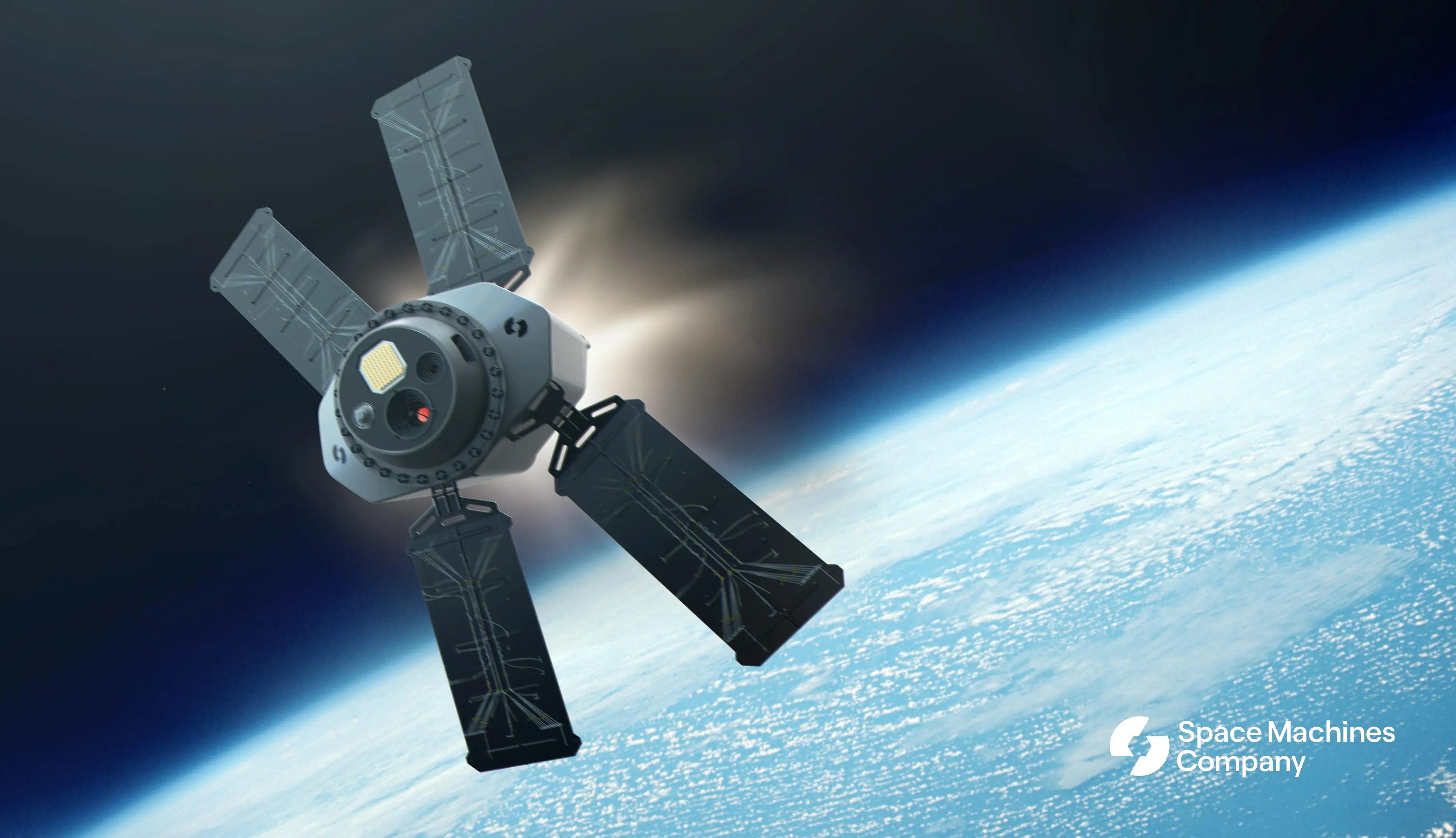
Space Machines Company unveils Optimus Viper: A rapid-response space security platform at commercial scale
Space Machines Company unveils Optimus Viper: A rapid-response space security platform at commercial scale
Distributed and resilient orbital capability brings unprecedented speed and close proximity operations to safeguard trillion-dollar space infrastructure
SYDNEY, AUSTRALIA, 12 DECEMBER 2024 — In an era where safeguarding space has become paramount to preserving the rules-based global order and ensuring ongoing international prosperity, Space Machines Company (SMC) today announced a breakthrough in space security technology. The company unveiled Optimus Viper, a rapid-response spacecraft variant specifically designed to provide immediate, high-fidelity intelligence and protection for critical space assets.
Operating at distances less than 10 kilometres from target satellites, Optimus Viper delivers the kind of detailed, actionable intelligence about critical space infrastructure that, until now, has been impossible to achieve. This announcement signals a fundamental shift in space operations, introducing the world's first distributed, hyperscale production approach to delivering rapid on-orbit response for both national security and commercial space assets.
"During a time of rapidly evolving threats, space sustainability and security isn't defined by the size of our systems but by their resilience and adaptability, Optimus Viper will revolutionise how we operate in space by delivering distributed and dynamic capabilities at a fraction of traditional costs. In today's contested space domain, where billions in critical infrastructure face immediate threats, rapid intelligence and protection capabilities are vital to safeguarding our way of life." — Rajat Kulshrestha, CEO and Co-Founder of Space Machines Company
Building on lessons learned from the launch of SMC's inaugural satellite Optimus earlier this year aboard a SpaceX Falcon 9 rocket, Optimus Viper represents a fundamental shift in space security architecture. This agile 200-kilogram class "space first responder" can deploy within 24 hours of launch and operate within 10 kilometres of target satellites, combining enhanced autonomous capabilities with Solstice OS (Space Machines AI-driven orbital operating system) to deliver a dynamic, adaptive space presence that becomes more capable as it scales. The platform's multi-mission flexibility enables rapid reconfiguration for different objectives, from space domain awareness to precise orbital monitoring.
In a world-first announcement that democratises access to space asset protection, SMC is introducing commercial pricing for proximity inspection at $2-3M USD per inspection in Low Earth Orbit (LEO)—a fraction of the tens of millions it can cost currently. This dramatic shift in economics makes advanced space security accessible to both government and commercial operators while supporting the expanding commercial space economy.
SMC plans to expand its Australian manufacturing capabilities to produce Optimus Viper Rapid Response Vehicles (RRV) at speed and scale. The company will manufacture these sophisticated vehicles for 1/10th the current cost for such capability—a paradigm shift in space economics that makes distributed space security financially viable for the first time. This approach delivers resilience through increased distributed and dynamic capabilities, an expanded space industrial base, and reduced total cost.
Optimus Viper is designed from the ground up to be allied by design, dual-use, and interoperable, playing a unique and important role in delivering space superiority across allied nations while supporting commercial space operations. This approach mirrors the effectiveness of terrestrial and maritime defence strategies to protect and maintain our position in the 'ultimate high ground' while ensuring the continued growth of commercial space activities.
"Today's dynamic space environment demands a new model of allied collaboration, Allied-by-design isn't just a feature—it's the foundation for effective space operations. By developing capabilities that are inherently interoperable, we multiply our collective effectiveness while sharing costs. This approach transforms how we operate in space, creating the agility and resilience needed to address emerging challenges." — Lieutenant General Larry James, former Deputy Director of NASA's Jet Propulsion Laboratory and newly appointed advisor to SMC
SMC's ambitious deployment schedule includes multiple capability missions throughout 2026, rapidly building operational capability and proving the system's effectiveness across various orbital regimes. This accelerated timeline reflects the urgent need for resilient space security solutions in an increasingly contested environment where both national security and commercial assets face evolving threats.
"We're not just building spacecraft—we're creating a new paradigm for space security and sustainability, Each Optimus Viper deployment increases our collective space resilience while decreasing operational costs. This is how we safeguard humanity's progress in space—through distributed, rapid, and resilient capabilities that scale with the growing threats to our space infrastructure." — Rajat Kulshrestha, CEO and Co-Founder of Space Machines Company
ENDS
About Space Machines Company
Space Machines Company (SMC) is leading the transformation of space operations through its Orbitside Assist capability. As the 'first responders' for the safety and sustainability of space operations, SMC provides rapid on-orbit response to monitor, assist, and protect space assets in any Earth orbit. Through its AUKUS and QUAD footprint, SMC is positioned to become a critical part of the allied system to safeguard space and build resilience within the space defence industrial base while supporting the growth of commercial space activities.